Posts

Showing posts with the label ETHICS

INDIAN ETHICS

Image
Ethics is a branch of philosophy in western philosophy. In the Indian perspective, Ethics is coeval with philosophy. Philosophy is not just an intellectual inquiry but a way of life. Indian thinkers aim at the realization of the Ultimate Reality. Indian thinkers take a synthetic view of life. For them, there are no watertight compartments among philosophical problems. The Indians have a strong faith in the moral order that prevails in this universe. Everyone has to contribute to the universal moral order. Every individual has a role to play in this universe. Every role brings with it specified duties and responsibilities. In the Indian view, the obligation of an individual is not confined to human society only. It is extended to the whole of sentient creation. Indian philosophy holds, “Love thy neighbor as thyself and every living being is thy neighbor”. Moral philosophy in India is truly speaking the art of living a good and disciplined life. THE FEATURES OF INDIAN ETHICS ...

NATURE OF ETHICS - 3

Image
Facts and Values Positive sciences are related to facts. Fact is related to 'what is'. The fact stands for things or events as they exist in a particular space and time. Facts and phenomena have no concealed significance beyond what they present to us in external experience. They are descriptive. Fact is something known to be true. It is a piece of information or reality. Facts satisfy our intellect. Normative science deals with values. It is concerned with 'what ought to be'. Values are something to be pursued in life. Values belong to the background of facts and they are recognized by consciousness. Values are prescriptive. They are evaluative. Values are over and above the framework of facts that is constituted by matter, space, time, and causality. Values are neither true nor false. Values satisfy our desires & aspirations. We become aware of the world of nature by sense and reason. Values do not exist in space and time like the objects of natur...

NATURE OF ETHICS - 2

Image
Ethics: A Theoretical science or practical science? Many Western thinkers believe that Ethics is not a practical science. Practical science teaches us to know how to do. It is concerned with means for the realization of a definite end. In this sense, medical science is a practical science as it points out how the ideal of good health can be achieved. Ethics is not a practical science as it gives us knowledge of guiding principles but does not tell us how to apply them. As per western thinkers, ethics teaches us to know "Only what to do, not how to do." However, in the Indian context, Ethics is a practical science. Different schools of Indian Philosophy prescribe the supreme end of life (mostly liberation) and prescribe the path to attain it. The ethics of Bhagawad Gita prescribes the duties of an individual. Bhagawad Gita teaches us to know "Not only what to do, but also how to do." Ethics is not an Art Ethics is concerned with conduct or behavi...

NATURE OF ETHICS - 1

Image
Ethics is a science Science is a systematic and more or less complete body of knowledge about a particular set of related events or objects. A scientific method has the steps of accurate observations, classification, and explanation. Ethics aims at a systematic explanation of its subject matter. It systematically aims at an explanation of rightness and wrongness in human conduct about ideals. It systematically classifies our actions into voluntary, involuntary, moral, non-moral, and evaluates them. Ethics is a normative science Every individual has three faculties viz. Cognitive, Affective, and Conative (knowing, feeling, and willing or acting). Human beings seek knowledge and they try to apprehend Truth. They have emotions and they try to create Beauty or harmony. Human beings have the will to transcend facts and they try to realize Good. Thus, there are 3 ideals in human life corresponding to the three aspects of human nature. Truth, Beauty and Good are the Supreme Ide...

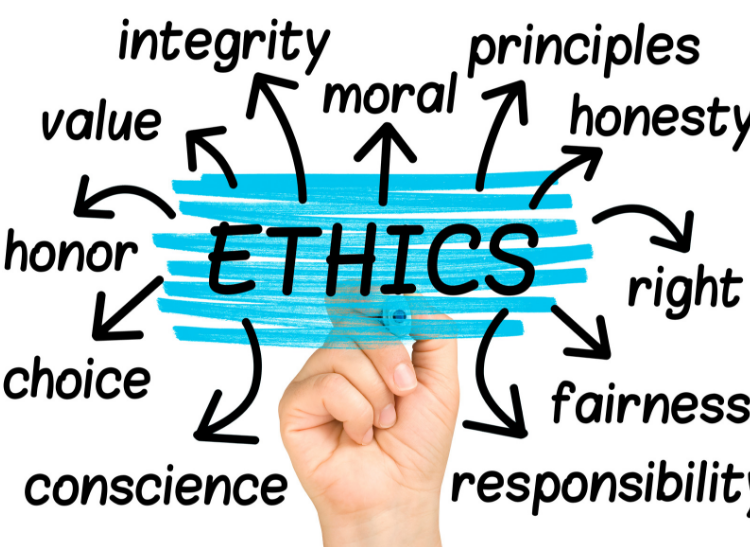
ETHICS

Image
Philosophy arises from the individual wonder about this universe. Philosophy is the speculation about the empirical as well as the transcendental world. Ethics is a branch of philosophy that arises from the curiosity about the values involved in human behavior. Human conduct is a chain of voluntary actions. It implies the inherent and intense desire for higher ideals. All activities, determined by ends, are related to Ethics . Ethics investigates the nature of human conduct accordingly. The ultimate goal of the quest of human life is usually mentioned by words like The Good, the Highest Good, the Supreme Good or End, Summum Bonum, etc. Ethics is the practical application of human reasoning. It is related to the existence of the individual in this world and his quest for supreme ideals. Ethics as a normative science evaluates human conduct with Summum Bonum of life and declares the actions as good or bad, as of right or wrong. The question arises whether Ethics is a ...